Advanced Industrial CPVC Piping Systems for High-Temperature & Corrosive Applications
Industrial environments demand piping systems that can consistently perform under extreme temperatures, aggressive chemicals, elevated pressures and continuous operation. Prince Onefit with Corzan CPVC technology is engineered to deliver long-term reliability in such demanding conditions.
Developed in collaboration with Lubrizol, the inventors of Corzan CPVC compounds, this industrial CPVC piping system is designed to outperform conventional metal and standard plastic piping systems across corrosive industrial applications. Whether used in chemical processing plants, chlor-alkali facilities, wastewater treatment systems, mineral processing operations or power generation plants, Prince Onefit offers superior corrosion resistance, dependable hydraulic performance and lower lifecycle costs.

Faster and Safe Installation

Reduced Installation Cost

Reduced Downtime

Superior Chemical Resistance

Superior Corrosion Resistance
Fluid Handling Properties

Higher Impact Resistance
Highest HDT Rating

Outstanding Weatherability

Longer Service life

Chemical Processing

Chlor-Alkali Processing Industry

Mineral Processing Industry

Power Generation Industry

Wastewater Treatment Plants
Prince Onefit industrial CPVC piping systems resist a broad range of acids, alkalis, salts and corrosive industrial chemicals. Unlike metal pipes, they do not rust, corrode or contaminate transported fluids.
Prince Onefit is built for continuous operation at temperatures up to 93°C. It retains shape, strength and overall performance even if the industrial processing conditions are demanding.
The system offers long-lasting resistance against internal and external corrosion, reducing replacement frequency and lowering maintenance costs.
As a lightweight industrial CPVC pipe solution, Prince Onefit can be installed quickly without welding, hot work permits or heavy fabrication equipment.
Leak-resistant solvent cement joints and durable pipe construction help minimise process interruptions and maintenance shutdowns.
The smooth bore surface reduces scaling, sediment build-up and friction losses, helping maintain efficient flow throughout the service life of the system.
Prince Onefit CPVC has thermal conductivity nearly 1/300th that of steel, helping reduce heat loss, insulation requirements and surface temperatures.
Prince Onefit industrial piping systems feature a Limiting Oxygen Index (LOI) of 60 and self-extinguishing properties, making them suitable for high-performance industrial applications.
The system is designed to withstand prolonged UV exposure, harsh weather conditions and demanding outdoor environments.
Prince Onefit industrial piping systems are engineered for dependable performance in high-pressure, corrosive and temperature-intensive applications.
Prince Onefit is manufactured using advanced Corzan CPVC compounds developed by Lubrizol, the global pioneers and inventors of CPVC technology since 1959.
This Corzan CPVC technology is specifically engineered for:
Prince Onefit industrial CPVC piping systems are built to handle a wide range of aggressive industrial chemicals, including:
Prince Onefit with Corzan CPVC technology offers one of the highest Heat Distortion Temperature (HDT) ratings among industrial thermoplastic piping systems.
Manufactured using premium industrial-grade CPVC compounds, the system complies with ASTM D1784 Cell Class 24448 standards, making it suitable for demanding industrial process applications.
This advanced CPVC industrial piping system is specifically designed for industries where elevated temperatures and aggressive chemicals are common.
Many conventional plastic piping systems lose strength at elevated temperatures. Prince Onefit industrial CPVC pipes are designed to maintain performance under continuous service temperatures up to 93°C.
This makes the system ideal for:
The material’s high-temperature stability helps reduce failures, improve safety and support long-term operational efficiency.
Prince Onefit Corzan CPVC industrial piping systems are engineered for aggressive chemical environments where traditional piping materials often fail prematurely.
The system provides excellent resistance against:
Prince Onefit is widely used as a CPVC pipe for chemical industry applications because it resists corrosion while maintaining long-term structural performance.
Prince Onefit industrial CPVC pipes provide excellent fire safety characteristics without the need for additional flame retardants.
Unlike many conventional plastics, Prince Onefit CPVC will not sustain combustion once the ignition source is removed.
Prince Onefit industrial CPVC piping systems maintain smooth internal surfaces throughout their operational life, reducing scaling and friction losses.
Compared to metal piping systems, Prince Onefit CPVC significantly reduces heat transfer and surface temperatures.
Prince Onefit industrial CPVC pipes are designed for long-term outdoor exposure and demanding environmental conditions.
The system can also be painted with standard acrylic latex coatings where additional UV protection is required.
The chlor-alkali industry involves highly corrosive operating conditions that demand dependable piping solutions.
Prince Onefit CPVC pipes are widely used in wastewater treatment and water recycling facilities.
Mining and mineral processing facilities rely on Prince Onefit for handling abrasive and chemically aggressive media.
Prince Onefit industrial CPVC pipes are suitable for cooling water systems, treatment plants and chemical handling applications in power facilities.
Prince Onefit piping systems are suitable for selected corrosive chemical handling applications within oil and gas processing operations.
Corzan CPVC technology is used in HVAC and industrial utility systems where corrosion resistance and temperature performance are essential.
| Feature | Prince Onefit | Metal Piping Systems |
|---|---|---|
| Corrosion Resistance | Excellent | Poor to Moderate |
| Weight | Lightweight | Heavy |
| Installation | Easy & Fast | Complex |
| Maintenance | Low | High |
| Scaling & Fouling | Minimal | High |
| Chemical Resistance | Excellent | Limited |
| Lifecycle Cost | Lower | Higher |
| Thermal Conductivity | Low | Very High |
| Service Life | Long | Moderate |
| Feature | Prince Onefit | HDPE Piping Systems |
|---|---|---|
| Resistance to Teneprature | Up to 93°C | Typically up to 55°C |
| Method of Jointing | Solvent Cementing | Butt Welding |
| Installation Skill Requirement | Low | High |
| Fire Performance | Self-Extinguishing | Supports Combustion |
| Structural Strength | Higher | Moderate |
| Thermal Expansion | Lower | Higher |
Prince Onefit industrial CPVC piping systems comply with globally recognised ASTM standards, such as:
The system is made using ASTM D1784 Cell Class 24448 compounds for industrial-grade performance.
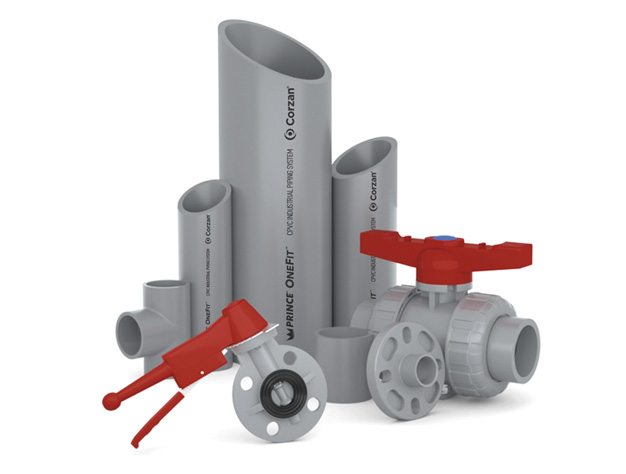
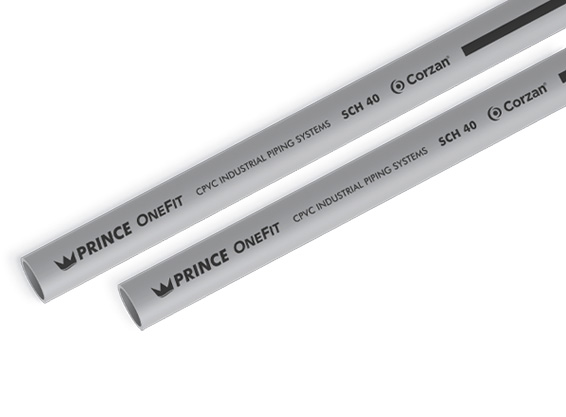
Prince Onefit offers a comprehensive range of industrial CPVC pipe solutions for demanding industrial applications.
Available in multiple sizes and pressure classes to suit varied industrial fluid handling requirements.
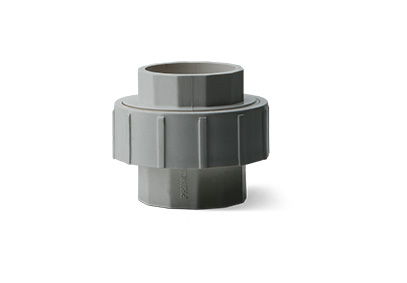
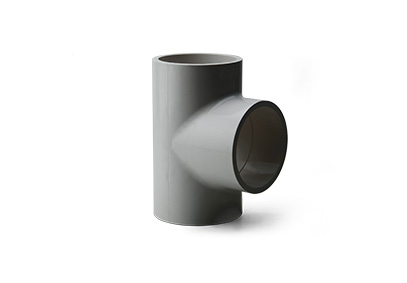
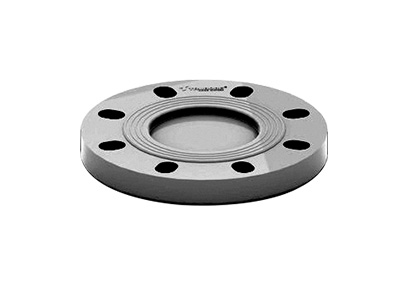
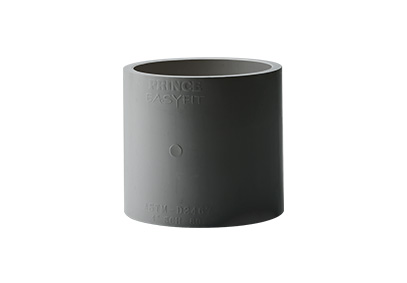
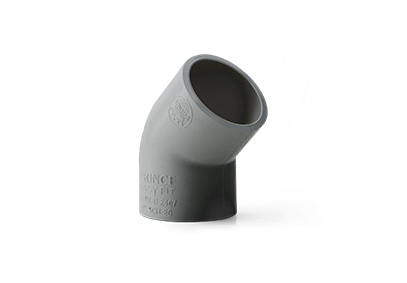
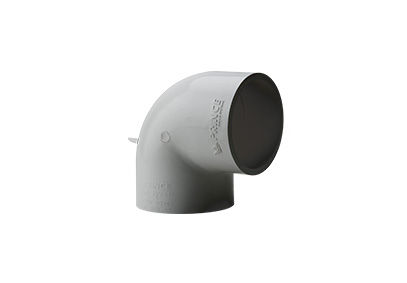
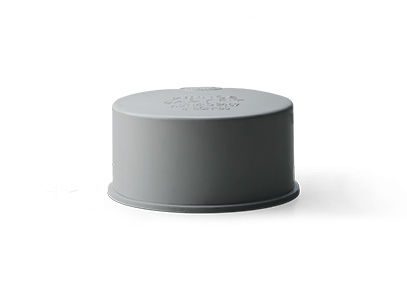
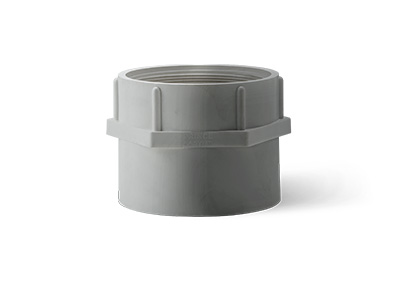
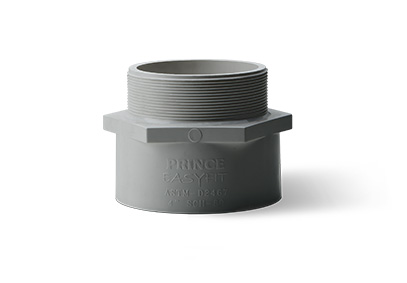
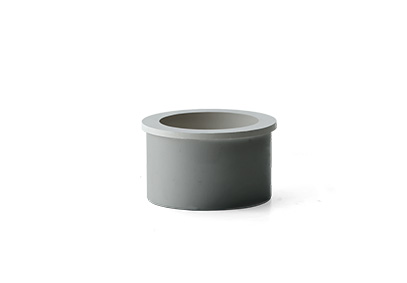
Prince Onefit offers a complete range of CPVC industrial fittings engineered for reliable joint performance.
These CPVC industrial fittings are designed for compatibility with SCH 40 and SCH 80 industrial piping systems.

Always use the recommended solvent cement for industrial CPVC pipe joints.

Do not use damaged pipes or fittings.
Make sure pipes are properly supported and correctly aligned during installation.
Keep pipes and fittings away from direct flames
Carry out pressure testing before the system is put into operation.
Avoid applying excessive force when tightening threaded fittings.
Provide expansion loops wherever thermal movement needs to be accommodated.
Ensure long pipe stretches are properly supported throughout the system.
Keep pipes stored away from sharp materials and avoid placing excessive weight on them.
Always verify chemical compatibility before using the piping system with industrial fluids.


-6583.jpg)