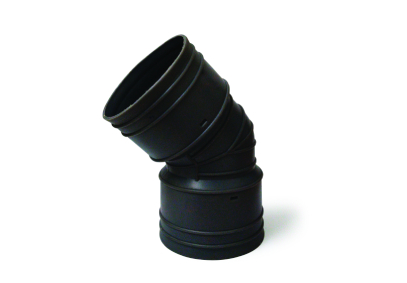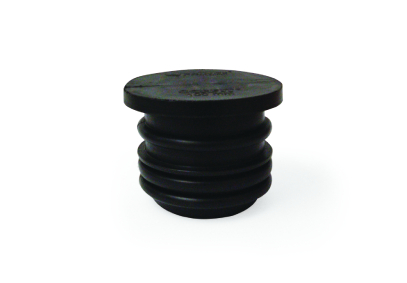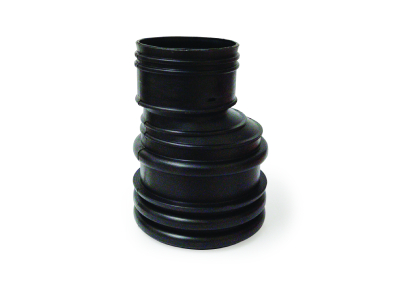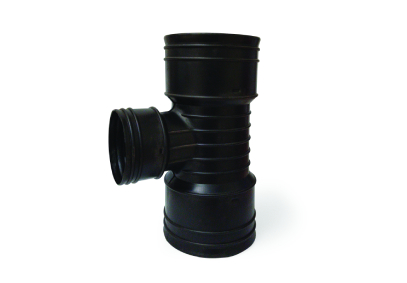
Corfit - polyethylene inspection chamber

Corfit Polyethylene Inspection Chamber

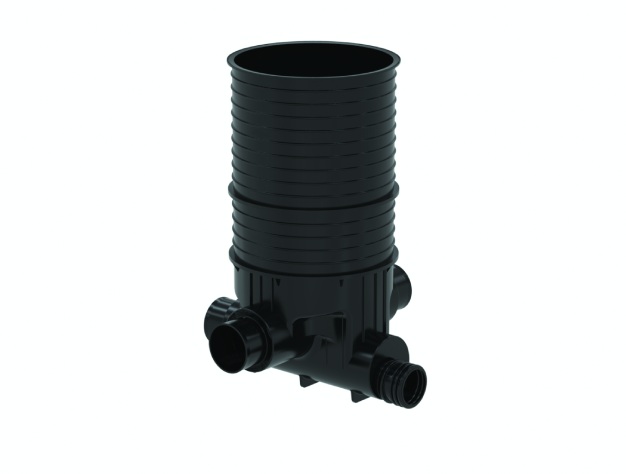
Prince Corfit Inspection Chamber is a robust polyethylene inspection chamber designed to provide convenient access to underground drainage and sewerage networks. Manufactured in accordance with EN 13598-1, it offers a durable, leak-resistant solution for inspection, maintenance and cleaning activities across residential, commercial and infrastructure projects.

Built as a single-piece moulded chamber, Corfit combines strength, chemical resistance and ease of installation. Its lightweight construction, anti-float design and smooth flow characteristics help ensure reliable long-term performance while reducing maintenance requirements throughout the life of the drainage system.
Corfit Ins1
USAGE
  • Where a branch pipe meets the main drainage pipe in the underground drainage system
  • Where there is a straight run of underground drain, Inspection Chambers need to be installed at specific intervals for maintenance purpose
  • Where there is a change in the drainage direction
  • Where there is a change in the gradient
  • Where there is a change in the drainage size
Corfit Ins2
FEATURES

Single piece structure for easy installation and leak-free joints

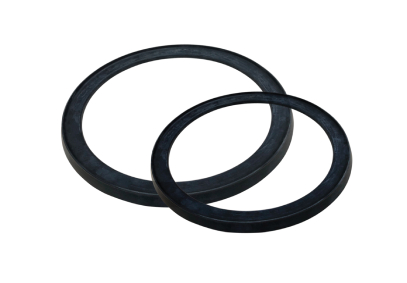
Socket, spigot and side inlet connections with rubber sealing ring

Resistant to floating due to ribs and collar provided on external surface of riser/shaft

Abrasion resistant

Smooth inside invert surface for high hydraulic capacity

Chemical resistant

About 2° slope provided for gravity flow in Inspection Chamber base

Light weight

SIZES: 315mm & 600mm

Inspection Chambers are available in sizes 315mm & 600mm and suitable for invert depth.

  • For 600mm diameter the invert depth 1.25metre
  • For 315mm diameter the invert depth 0.75metre

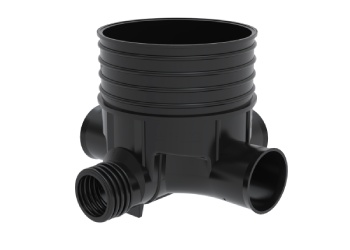
315mm Inspection Chamber

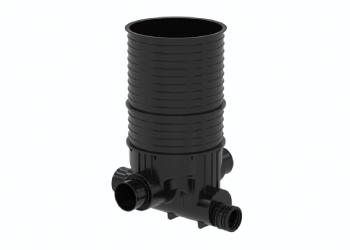
600mm Inspection Chamber with closed side inlets

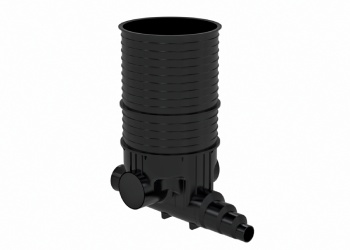
600mm Inspection Chamber with open side inlets

Note: Open & closed side inlet is available in 600mm. As per site requirement, the required size and side to be cut before installation.

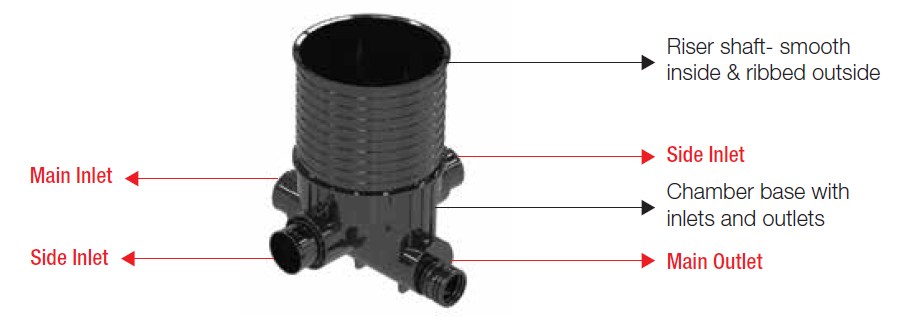
PARTS
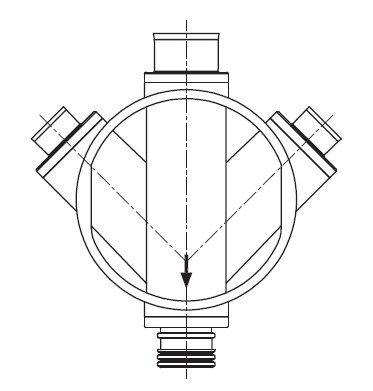
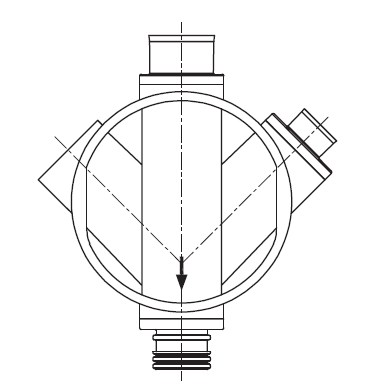
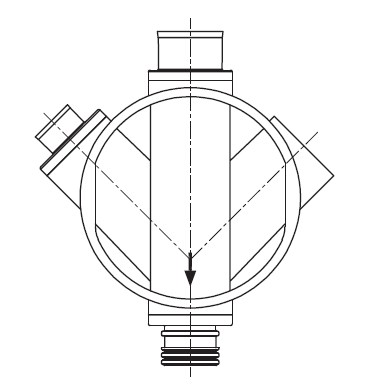
TYPES OF INSPECTION CHAMBERS

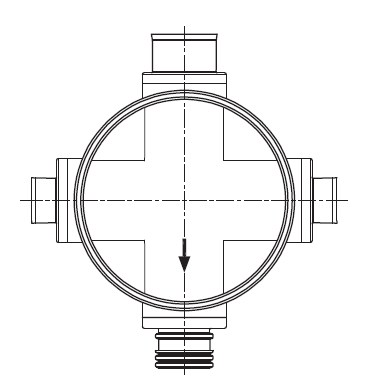
LH & RH - 45° INLETS

Size: 600mm

RH - 45° INLET

Size: 600mm

LH - 45° INLET

Size: 600mm

LH & RH - 90° INLETS

Size: 315 & 600mm

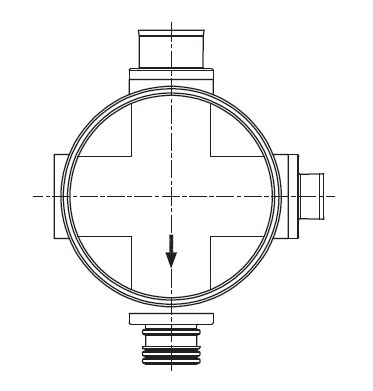
RH - 90° INLET

Size: 600mm

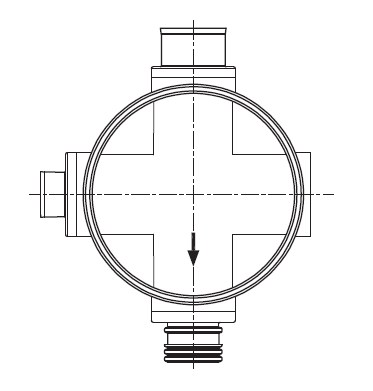
LH - 90° INLET

Size: 600mm

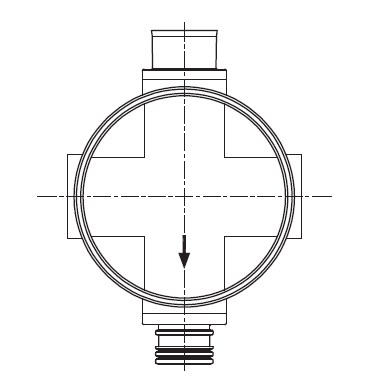
STRAIGHT

Size: 600mm

COMPATIBLE WITH
UNDERGROUND PIPING SYSTEMS

The base of Corfit Inspection Chamber is compatible with below underground drainage pipes:

Size of Inspection Chamber Drainfit Pipes as per IS 15328 Foamfit Pipes as per IS 16098 - Part 1 Corfit Pipes as per IS 16098 - Part 2
600mm Base 110mm 110mm 100mm
160mm 160mm 150mm
200mm 200mm 200mm
315mm Base 110mm* 110mm* 100mm

It is also compatible with other underground drainage pipes available in the market as per the above mentioned standards.

Note: *For the marked sizes, adaptors will be provided.

CHAMBER COVER

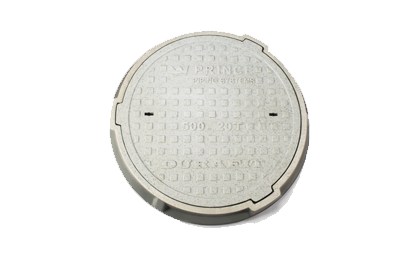
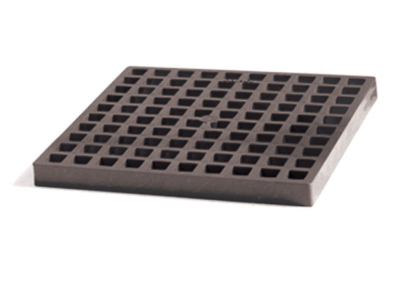
Corfit Inspection Chambers can be equipped with Durafit Chamber Covers on top of the concrete fulcrum ring. These covers are made as per BS EN 124 standards:

  • A15 kN - 1.5 ton load
  • B125 kN - 12.5 ton load
  • C250 kN - 25 ton load
  • D400 kN - 40 ton load

Durafit Chamber Cover

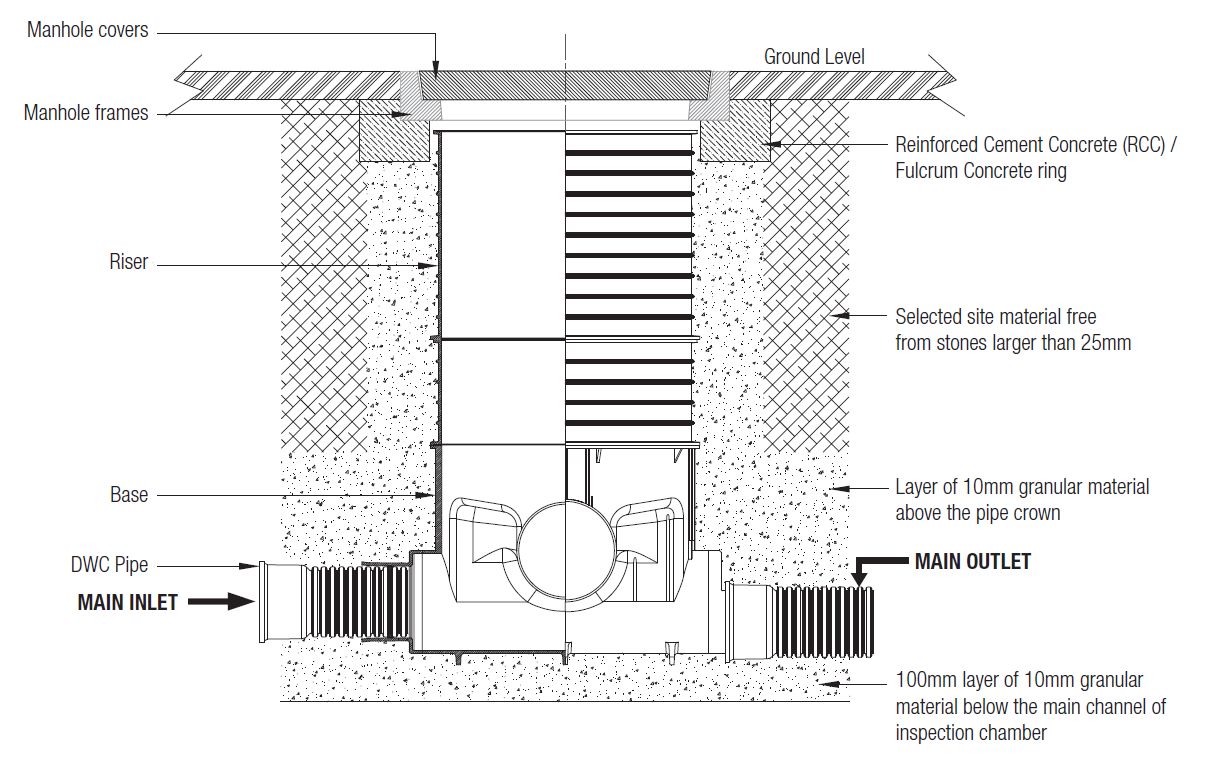
CROSS SECTIONAL VIEW OF
INSPECTION CHAMBER INSTALLATION
INSTALLATION PROCEDURE
  1. Ensure the trench excavation is at least 300mm wide on each side of the chamber base considering the characteristics of natural soil.
  2. Level the trench bottom and prepare bedding of minimum 100mm sand. Ensure that sand and trench base do not have sharp edges, big size stones or sand particles.
  3. Clean the chamber base socket and riser pipe. Then apply lubricants on the rubber ring.
  4. Position the chamber on the bed and connect the main trunk sewer line to chamber inlet. In case, sand bedding is low, increase the height and connect the chamber base inlet to main sewer line.
  5. Use the spirit bubble level scale for leveling the top of the chamber base.
  6. Cover the main sewer pipe 200-300mm with backfilled/sand material.
  7. The chamber is now firmly set on the main sewer line and is ready to connect laterals.
  8. Connect laterals and trunk outlet to chamber base sockets. All unused inlets, if open, should be plugged.
  9. Cut the inspection chamber with the help of a fine-toothed saw to fit into the required height.
  10. Inspection chambers are provided with ribs at a distance of 50mm for 600mm diameter and at 32mm for 315mm diameter to cut according to invert depth suitability as per site condition.
  11. Fill granular material (similar to bedding material) around the chamber.
  12. Backfilling of the trench should be carried out in successive uniform compacted layers of 200-300mm with good practice around entire circumference of the inspection chamber. Ensure backfill material from stone size of 40mm (1½”), lumps clay greater than 90mm (3”) and timber or other material that could prevent sound compaction.
  13. Prevent the compactor equipment/ backfill material from knocking with inspection chamber during compaction & backfill.
  14. It is necessary to compact the soil with the minimum Standard Proctor Density (SPD) of 90% with regular to heavy traffic.
  15. Keep backfill level 60mm/ 90mm below the top of the inspection chamber.
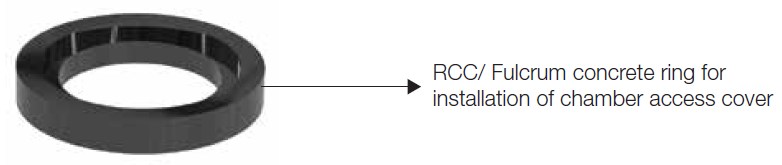
  16. Put the RCC/ Fulcrum concrete ring having minimum height of 85mm around the top of inspection chamber. The purpose of RCC/ Fulcrum concrete ring is to transmit the vehicle load towards the lower layers of the road, thus avoiding direct loading on the chamber.
  17. The distance between outer diameter of inspection chamber and inside of fulcrum concrete ring must be minimum 10mm on each side. This assures the weight (static load of chamber cover and vehicular load) is not transferred directly on chamber assembly.
WHY INSPECTION CHAMBERS MATTER IN UNDERGROUND DRAINAGE

Even the best-designed drainage systems need to be checked from time to time. Since the pipelines are buried underground, inspection chambers provide a practical way to access the network whenever cleaning, maintenance or troubleshooting is required. This makes it easier to deal with blockages and carry out repairs without unnecessary digging.

Inspection chambers provide easy access to underground drainage lines whenever maintenance is required. This makes it simpler to locate and clear blockages, carry out repairs and keep the drainage system operating efficiently over time.
WHERE TO INSTALL CORFIT INSPECTION CHAMBERS

Corfit Inspection Chambers are typically installed at strategic points within underground drainage networks, including:

  • Changes in pipeline direction
  • Changes in pipe gradient or slope
  • Changes in pipe diameter
  • Junctions where branch lines connect to the main drainage line
  • Long straight drainage runs where periodic inspection access is required

Correct placement helps simplify maintenance activities while improving the long-term performance of the drainage system.

COMPATIBLE UNDERGROUND PIPING SYSTEMS

Corfit Inspection Chambers are compatible with a range of Prince underground drainage systems, making it easier to design and build complete drainage networks using products that work together seamlessly.

Compatible System Standard
Drainfit Underground Drainage Pipes IS 15328
Foamfit Structured Wall Pipes IS 16098-1
Corfit Structured Wall Pipes IS 16098-2

This compatibility provides greater flexibility when designing drainage and sewerage networks across residential, commercial and infrastructure projects.

CHAMBER COVER OPTIONS

Corfit Inspection Chambers can be used with Prince Durafit drainage chamber covers that comply with BS EN 124 load classifications.

Load Class Typical Application
A15 Pedestrian areas
B125 Footpaths and parking areas
C250 Kerbside applications
D400 Roads and heavy traffic areas

Selecting the appropriate load class helps ensure safe and reliable performance under site-specific loading conditions.

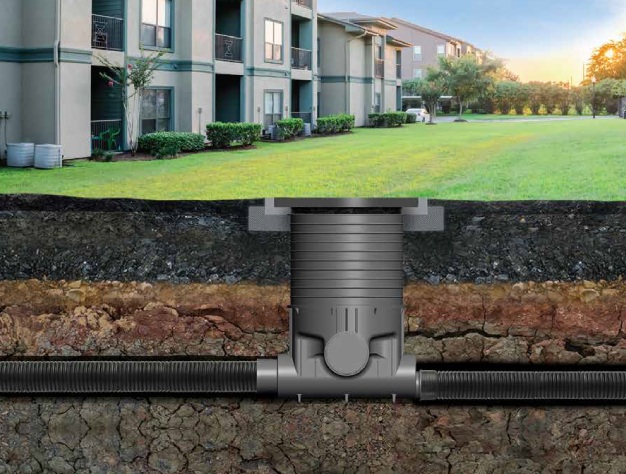
CROSS-SECTIONAL VIEW OF INSTALLATION

This illustration shows how a Corfit Inspection Chamber is typically installed within an underground drainage network, giving a clear view of how the chamber, riser, cover and connecting pipes fit together as part of the overall system.

WHY CHOOSE PRINCE CORFIT INSPECTION CHAMBERS?
  • Manufactured in line with EN 13598-1 requirements for underground drainage and sewerage applications
  • Single-piece polyethylene construction that helps minimise potential leakage points
  • Leak-resistant design for improved reliability and long-term performance
  • Anti-float ribs that provide added stability in areas with high groundwater levels
  • Resistant to corrosion and a wide range of chemicals commonly found in wastewater systems
  • Compatible with Prince Drainfit, Foamfit and Corfit piping systems for easier network integration
  • Suitable for residential, commercial and infrastructure drainage projects
  • Supported by Prince Pipes' nationwide distribution network and technical expertise
FAQ
Corfit Inspection Chambers are manufactured from high-quality polyethylene (PE), a durable material known for its chemical resistance, impact strength and long service life in underground drainage applications.
Corfit chambers are available in 315 mm and 600 mm sizes. The maximum recommended invert depth is 0.75 m for 315 mm chambers and 1.25 m for 600 mm chambers.
Corfit Inspection Chambers are manufactured in accordance with EN 13598-1, the recognised standard for inspection chambers and manholes used in underground drainage and sewerage systems.
Corfit chambers are designed to work with Prince Drainfit, Foamfit and Corfit underground piping systems, making it easier to create a complete drainage network using compatible components from a single trusted source.
Corfit chambers can be fitted with Durafit covers available in A15, B125, C250 and D400 load classes, depending on the installation location and traffic conditions.